Safety as a mining advantage: Building culture, readiness and resilience across operations
In mining, standards, procedures, training, inspections and personal protective equipment may form the baseline for compliance. But working in human resources for the last 20 years has taught me that long-term safety performance depends on people, leadership, culture and continuous improvement. Safety is strongest when it is treated as an operating discipline, built into everyday planning and work, and continuously improved.
CGC Inc. is a vertically integrated, innovative and industry-leading building materials manufacturer that, for almost 120 years, has been shaping how the built environment supports the ways Canadians work, live, play and more by producing wallboard and interior building products used in homes, commercial and industrial buildings across Canada. Our supply chain begins with gypsum and extends through mining, milling, shipping and manufacturing. Safety is integrated across every stage. It sits at the centre of our operations, across our national network, from legacy facilities with long-established teams to modernizing sites where new systems and new employees are coming together at the same time. It is the foundation of our culture.
Each manufacturing plant in the CGC network has either a process improvement lead or a coordinator who uses data analytics tools to identify trends and help manufacturing leaders identify and eliminate hazards. Across CGC’s network, day-to-day operations are supported by formal programs and systems, structured issue-reporting tools such as Continuous Improvement (CI) Cards and work requests, and targeted training for higher-risk activities that promote safe work practices.
Safety culture is reinforced through both formal mechanisms and routines that help identify risks early. These include shift huddles, hazard reviews, team communication, supervisor follow-up, informative onboarding, safety observations, clear expectation-setting and structured ways for workers to raise and resolve safety concerns.
In the competitive labour market in which we operate, people see us as a place to build a long-term career because of our strong safety culture.
Hagersville and the value of consistency
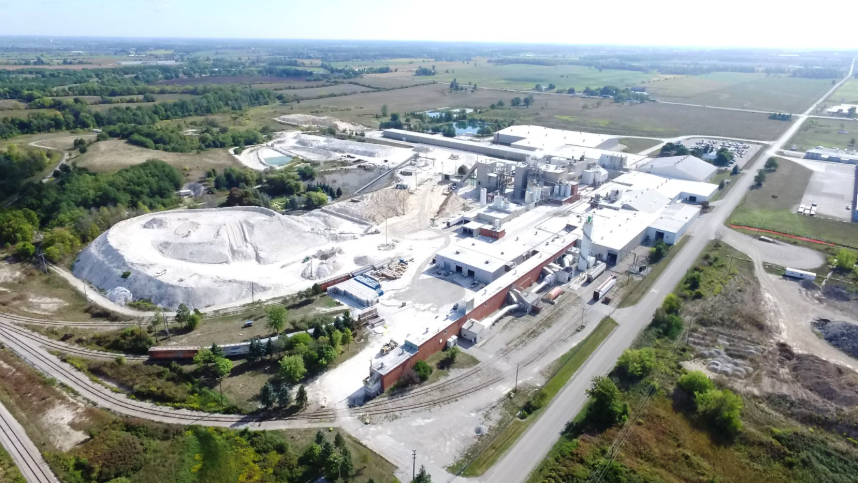
Part of the Haldimand community since 1931, CGC’s facility in Hagersville, Ont., remains one of the most complex operations in our network, bringing together an underground gypsum mine, a gypsum mill, two wallboard lines and joint compound production on one integrated footprint. Four hundred employees work across these interconnected activities, each with its own hazards and operating demands.
The site is also one of the clearest examples of what long-term consistency in safety looks like. Daily routines are reinforced by more formal mechanisms for continuous improvement. The Joint Health and Safety Committee supports training in areas such as mobile equipment, working at heights, confined space rescue and mine rescue, while programs such as the Pedestrian Safety Program and the Annual Safety and Engagement Program set clear expectations for how people and equipment move safely through the site and reinforce training for higher-risk tasks. Employees are also encouraged to raise concerns and suggest ideas through CI Cards and work requests and help solve the issues they identify, reinforcing that safety is everyone’s responsibility.
In addition to these programs, Hagersville reinforces safety through daily routines. Each shift begins with a safety huddle to review risks, discuss lessons learned from other plants in the global network and prepare for the work ahead, followed by a group stretch to help employees get ready for the physical nature of the work.
Consistency matters because culture is built through repetition and follow-through. When concerns and ideas are raised in huddles and supervisors respond constructively, employees see that safety is embedded in daily operations rather than treated as separate from the work itself.
The results reflect years of that discipline. Hagersville recently surpassed 4 million hours and more than 2,000 days without a lost-time injury. At an integrated mining and manufacturing site of this scale, those numbers represent thousands of individual decisions made correctly by employees looking out for themselves and their teammates.
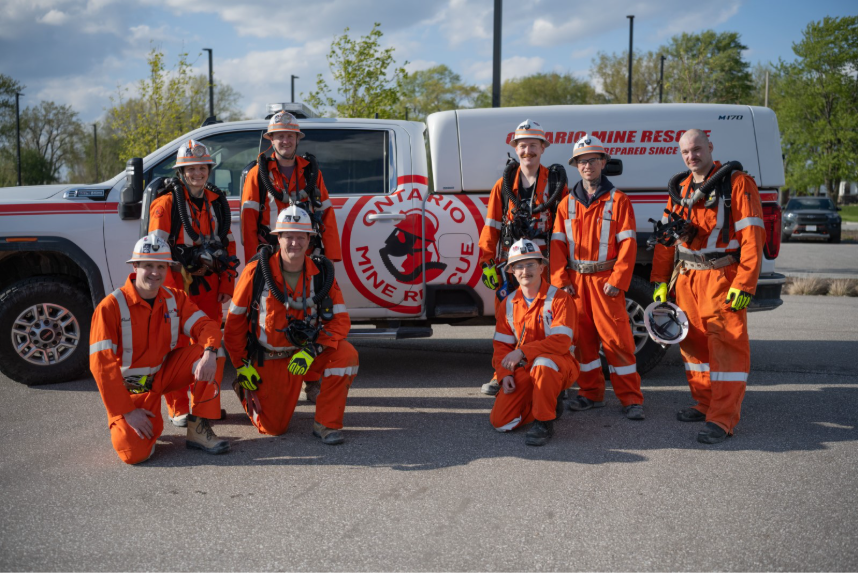
Preparedness is another dimension of the same culture. The Hagersville Mine Rescue Team demonstrates its problem-solving, first-aid and firefighting capabilities at the Southern District Mine Rescue Competition. The team’s years of training, commitment and pride in the work were recognized over the past two years in categories such as best team score, briefing officer, firefighting and first aid, alongside long-service awards for veteran members. The results point to a site culture that values readiness, discipline and shared responsibility long before an emergency occurs.
Little Narrows and the opportunity to build culture early
If Hagersville reflects a safety culture built over generations, Little Narrows, N.S., highlights the potential of revitalization.
CGC is investing $104 million to modernize the historic gypsum quarry at Little Narrows. The project will secure long-term gypsum supply for our operations and customers across Canada and along the Eastern Seaboard. New employee and testing facilities are nearing completion, and the site is transitioning from heavy construction toward an expanded, modern workplace in advance of full operations.
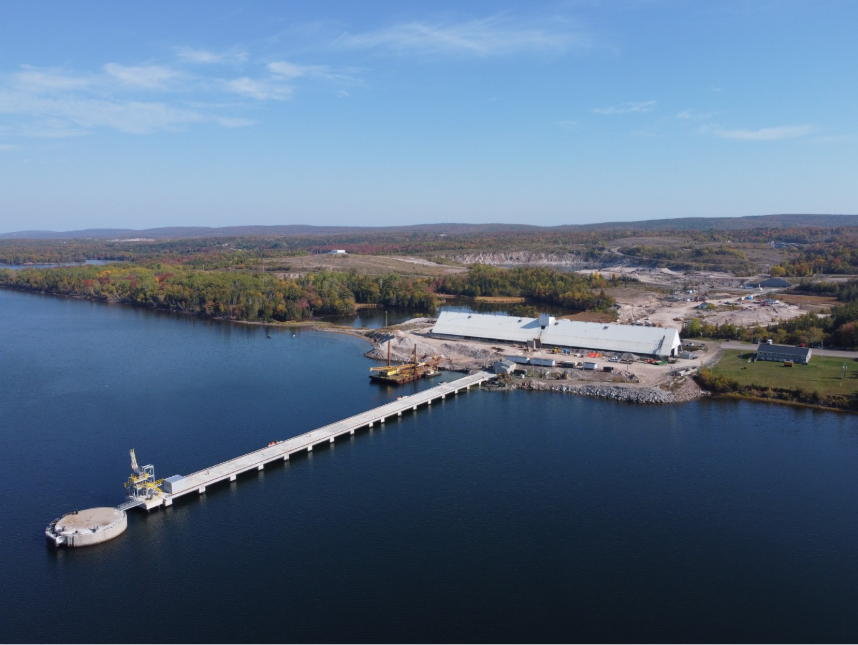
At Little Narrows, modernization includes major infrastructure and equipment upgrades such as real-time quality sensors, an automated ship loader designed to move up to 2 million tonnes of gypsum annually and simulator training tools that help employees build technical familiarity in low-risk conditions. These tools support safety and operational readiness by giving employees deeper knowledge of processes and roles before they are fully in motion.
The site has also introduced the first Komatsu WA700 wheel loader in North America. As with any new piece of equipment, the priority is to implement the right safety protocols from the outset, including measures such as proper fire suppression, so operations are safe and efficient from day one.
But the wider lesson is not just about technology. Restart and expansion projects create a narrow window to shape culture before habits take hold, which makes early decisions about hiring, onboarding, supervisor training, reporting expectations and site routines especially important.
Once fully operational, the quarry is expected to support more than 100 long-term mining jobs. As the workforce grows, new employees will quickly judge whether the safety culture is supported, supervisors are visible and expectations are reflected in daily practice.
A smart approach, based on principles such as clear expectations, strong onboarding, accountable leadership and practical routines, guides CGC’s network, including our recently opened Wheatland wallboard facility in Alberta. Here, structured onboarding, training and visible leadership are helping establish safe work habits early.
The lesson is clear. New mines, revitalized sites and major expansions should be viewed not only as capital projects but as culture-building opportunities.
Safety culture supports retention, resilience and supply reliability
At CGC, safety culture shapes how employees experience the workplace every day. It also has direct business implications. Employees know they are joining a company where concerns can be raised without stigma, leaders follow through and safe work is treated as a shared responsibility. This helps build trust, strengthen engagement and support long-term retention.
Safety culture also supports resilience in practical ways. We use connected employee platforms, such as Poka, designed for the manufacturing industry, to give employees easier access to work instructions, training, equipment information and issue tracking. These tools help standardize processes, strengthen communication and support faster follow-through. For CGC, that means fewer disruptions, stronger operational performance and a more reliable supply chain for customers.
A shared responsibility for the industry
Mining will always involve inherent risk, and managing that risk is a shared responsibility across the industry. At CGC, formal programs such as our Pedestrian Safety Program, Annual Safety and Engagement Program and Joint Health and Safety Committees help turn safety expectations into day-to-day operating practice. Combined with simple daily routines, these programs create structured ways for employees and leaders to identify risks early, solve problems and improve performance over time. The same approach applies across long-established operations like Hagersville and newer or revitalized sites like Little Narrows. For an industry that supplies the materials used to build Canada, safety is not separate from operational excellence. The takeaway is straightforward: a strong safety culture is not an added benefit of a well-run operation. It is one of the conditions that make operational excellence possible.
Joe Bielik is director of human resources at CGC.

Related Posts
Elemental seals $239M Vizsla deal for Panuco royalties
September 15, 2026
Elemental seals $239M Vizsla deal for Panuco royalties
MineConnect, Laurentian expand high school mining initiative
September 15, 2026
MineConnect, Laurentian expand high school mining initiative
Sponsored: Inventus eyes 2027 gold output at Pardo
September 15, 2026
Sponsored: Inventus eyes 2027 gold output at Pardo
Stormlands lifts Clarence Stream valuation 52.8% in new model
September 14, 2026
Stormlands lifts Clarence Stream valuation 52.8% in new model

Komatsu, SMS tapped to supply $1.5B-fleet to Crawford project
September 14, 2026
Comments