The case for a Canadian strategic minerals stockpile
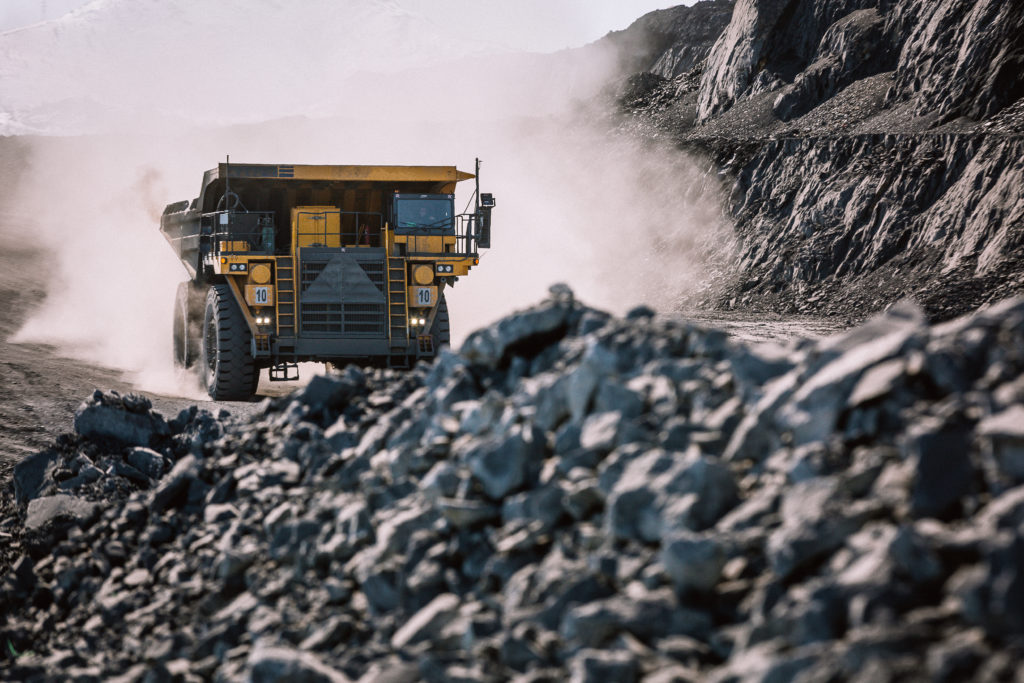
When one thinks about the foundational inputs successful modern economies possess, minerals are near top of mind. Having a reliable and diverse supply of minerals is the economic equivalent of being born on third base, and these advantages have allowed countries like Canada to prosper for some time.
We are confronted with a set of new realities wherein global supply chain disruptions and the pace of decarbonization makes it imperative for Canada’s future prosperity to get the critical minerals opportunity right. Lately, the promise of what has been called a “generational opportunity” feels like its slipping between our collective fingers as market volatility and competition for critical minerals like lithium, graphite, and rare earth elements (REEs) are not creating ideal environments for investment in firms meant to be extracting these elements. All of the enthusiasm from just two years ago feels unrealized thus far as powerhouses like China continue to extend their lead in the market. So, what do we do about it? One approach that is gaining traction is strategic mineral stockpiling.
Throughout history, a variety of nomenclatures have been used to describe mineral commodities in view of how important they are to our economy. In WWII, the term “war minerals” was used to describe the necessary materials needed for war-time munitions manufacturing. In the Cold War period, “strategic” materials were those essential for military operations, while “critical” materials were those that were indispensable for maintaining the broader civilian economy during a crisis. More recently, we have experienced a revival of sorts as the term “critical minerals” has been used to refer to a ring-fenced grouping of minerals integral for technologies used in decarbonization. Now, minerals are being defined as “strategic” if they are vital for a country’s military, national security, and heavy industry, yet its supply is vulnerable to disruption.
What ultimately makes a mineral “strategic” is not simply its price or scarcity, but the role it plays in enabling systems that a country cannot function without, particularly under conditions of disruption. Strategic minerals are those that include national importance and supply risk. They are essential inputs to defence capabilities, energy systems, and industrial production, yet their supply chains are vulnerable owing to geopolitical concentration, long development timelines, or limited processing capacity. In this sense, strategic value is defined less by geology or geography and more by consequences like what happens if access is lost or delayed.
Being blessed with an abundance of these minerals, however, does not equate secure access. Canada may have significant mineral endowment, but bringing them into production takes years, and refining and processing capacity is often located offshore. Vulnerability, in this case, does not emerge when the minerals are not there, but when they cannot be mobilized quickly enough in sufficient quantity to respond to demand. This gap between what is in the ground and what is available when it is needed lies at the heart of the next strategic minerals discussion and explains why stockpiling, sovereign wealth funds, and long term planning are becoming central policy considerations.
Strategic mineral stockpiles generally fall along a spectrum of ownership, management, and market intervention models, each designed to balance security of supply with cost and efficiency. At one end are government owned reserves, wherein a state-run agency purchases, owns, and manages physical inventories to ensure immediate access to materials during national emergencies, particularly for defence and critical infrastructure.
Another approach relies on industry held or decentralized mandates, where governments require private companies to maintain minimum inventories beyond normal commercial stocks, shifting the storage burden to industry while still enhancing national supply. This model is typically enforced through regulation and uses a mix of penalties and financial incentives rather than direct government ownership of stock.
Combining elements of each are hybrid systems in which governments own the material but contract industry to store and manage inventories using existing infrastructure. More collaborative public private partnership models go further by sharing investment and risk, with both governments and downstream users such as automakers or technology firms contributing capital or purchase guarantees to support large-scale stockpiles. Recently, the common parlance for these arrangements between EV manufacturers and critical mineral mining companies in Canada has been “off-take agreements.”
An important question for Canada is what strategy it should adopt to manage critical mineral supply, and whether a stockpiling strategy fits the current and future landscape. The recent announcement by the Carney government of Canada’s first sovereign wealth fund offer some indication of what strategies might be considered to solidify and accelerate mineral supply and production.
The Canada Strong Fund is designed to invest in strategic Canadian projects and companies alongside other investors ranging from infrastructure to advanced manufacturing to energy and mining. While this approach does not establish the Canadian government as mineral stockpile owners, it does have the potential to reduce the risk of producing critical minerals while also providing some insulation from volatile commodities markets. Following a similar model, it was recently announced that the Canada Growth Fund, a federal government-backed $15 billion investment vehicle, is investing approximately $25 million in Rio Tinto’s Sorel-Tracy, Que., facility to expand scandium oxide production to nine tonnes per year. As North America’s sole supplier, this project aims to strengthen regional supply chains for critical minerals used in aerospace and energy.
Building on these targeted co-investment approaches, a sovereign wealth fund strengthens resilience in the sector by systematically deploying long-term, counter-cyclical capital to stabilize projects through highs and lows. Through thoughtful investment, these funds can stabilize balance sheets and dampen fluctuating commodity price exposure. In so doing, a well-run fund can enable mines to survive volatility rather than being overly susceptible.
The Canadian government has already taken steps toward a version of strategic stockpiling and time will tell if more overt efforts will be made in the future, especially in-view of other related and ambitious programs like the Defence Industrial Strategy (DIS). A hybrid mineral stockpile strategy would buttress the DIS and the federal critical minerals strategy and just might be able to give the Canadian mining sector the lift it needs to compete globally while shoring up essential materials supply here at home.
Steve Gravel is the manager of the Centre for Smart Mining at Cambrian College.
Related Posts
Sponsored video: Canagold nears build decision at New Polaris
October 9, 2026
Sponsored video: Canagold nears build decision at New Polaris
Sponsored video: Westhaven and Dundee eye a new B.C. gold camp
October 9, 2026
Sponsored video: Westhaven and Dundee eye a new B.C. gold camp
The great Canadian white gold rush
October 9, 2026
The great Canadian white gold rush
Canadian mines need an AI decision log before automation scales
October 9, 2026
Canadian mines need an AI decision log before automation scales
Comments