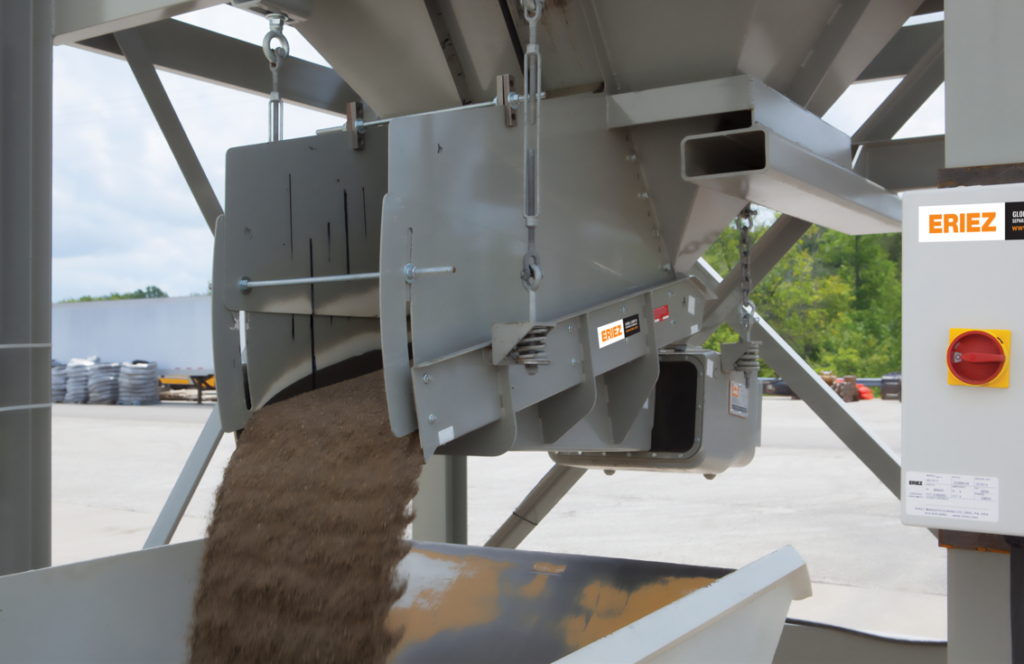
In mineral processing, vibratory feeding systems are used to move materials, like fine powders and heavy rocks, from a hopper to deliver them to downstream equipment. Optimising these systems is a key priority of companies looking to improve plant efficiency. Eriez, a company specializing in separation technology, has published a paper arguing that this flow often falters not because of the feeder itself, but due to poorly designed hopper transitions.
“Even the most advanced vibratory feeder cannot perform to specification if material is not presented correctly,” said Clay O’Dana, the paper’s author and the global product manager at Eriez.
The paper, which is titled Optimising hopper transitions: Design guidelines for maximum hopper-to-feeder performance, highlights design variables to adjust depending on individual materials. These include throat opening dimensions, gate height, hopper wall angles and structural clearances.
The paper also features illustrated examples, design ratios and installation guides. Eriez said the document is designed to help engineers and operators identify and resolve feeding issues before they result in lost throughput.
“These guidelines are based on decades of application experience and are designed to be applied directly in the field,” O’Dana concluded.
The full paper is available at eriez.com/hoppertransitionstechpaper.


Comments