
US and EU ink deal to counter China’s critical minerals grip
The United States and European Union formalized plans Friday to jointly secure supplies of critical minerals as both regions seek alternatives to […]
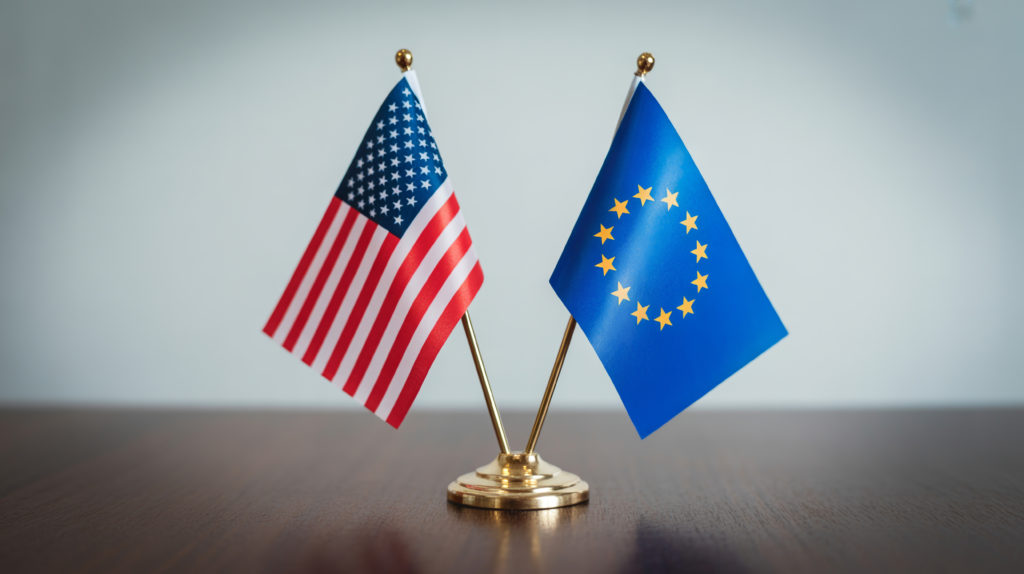
Credit: Adobe Stock
The United States and European Union formalized plans Friday to jointly secure supplies of critical minerals as both regions seek alternatives to China's market dominance in materials essential for defense and technology sectors.
Secretary of State Marco Rubio and EU Trade Commissioner Maros Sefcovic signed a memorandum of understanding aimed at reducing Western dependence on Beijing-controlled mineral supplies needed for semiconductors, electric vehicle batteries and weapons systems.
Rubio described the concentration of critical mineral resources in one or two locations as creating unacceptable risks for both economies. The agreement represents an unusual collaboration between the Trump administration and EU leadership, given the president's frequent criticism of European policies.
China has repeatedly demonstrated its willingness to weaponize mineral exports during diplomatic tensions, restricting access to materials that power modern industries. The country controls most global rare earth reserves and maintains near-total dominance over separation and refining operations.
Sefcovic said the partnership will span the complete mineral supply chain, covering everything from initial exploration and extraction through processing, refining, recycling and recovery operations. He emphasized that reducing dependencies represents a core economic security priority for both partners.
The EU official drew parallels to Europe's painful experience with energy dependence, noting how reliance on single suppliers created expensive vulnerabilities that policymakers want to avoid repeating with critical minerals.
The agreement establishes mechanisms for coordinating subsidies, stockpiles and research investments between the two economic blocs. Both sides will explore setting minimum pricing standards to prevent market flooding by low-cost competitors seeking to maintain monopolistic positions.
Officials also plan to develop joint technical standards that could streamline trade flows across Western nations while creating barriers for non-aligned suppliers.
The US Trade Representative's office identified this framework as the primary vehicle for developing a broader binding agreement among allied nations on critical minerals trade policies.
Rubio noted that American and European markets represent the largest global consumers of these materials, giving the partnership significant leverage in reshaping supply chains away from single-source dependencies.
The Trump administration has pursued similar arrangements with Mexico, Japan and Australia as part of a broader strategy to build alternative mineral supply networks among democratic allies.
September 29, 2026
September 29, 2026
September 29, 2026
September 28, 2026

September 28, 2026
Comments