Davos fallout: US-Canada trade at risk as Lutnick slams Carney’s speech
U.S. Commerce Secretary Howard Lutnick’s sharp criticism of Canadian Prime Minister Mark Carney’s recent World Economic Forum (WEF) speech and Canada’s new […]
U.S. Commerce Secretary Howard Lutnick's sharp criticism of Canadian Prime Minister Mark Carney's recent World Economic Forum (WEF) speech and Canada's new trade deal with China has heightened tensions in US-Canada relations, with potential implications for the mining sector.
Lutnick dismissed Carney's Davos remarks as "political noise" during a Bloomberg TV interview, expressing frustration with what he viewed as Canadian complaints despite the country's favourable trade position with the U.S.
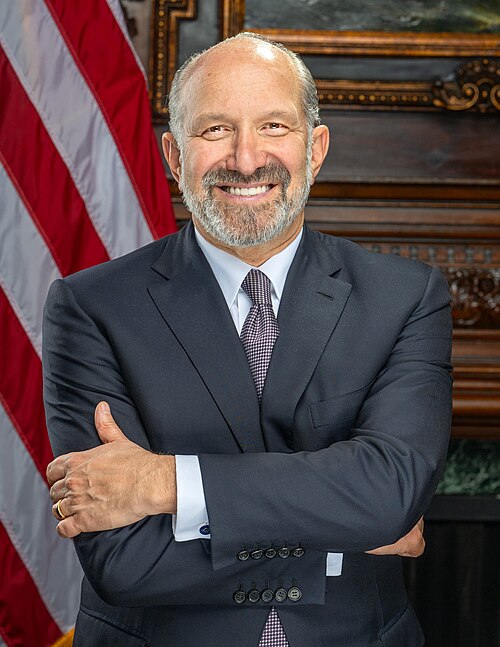
U.S. Commerce Secretary Howard Lutnick. PHOTO: Official Portrait
In a report from the Canadian Press, the commerce secretary warned Canada's recent agreement with China could disrupt ongoing CUSMA (Canada-U.S.-Mexico Agreement) negotiations. This development raises concerns for the mining industry, which relies heavily on stable trade relations for both equipment imports and mineral exports.
Carney's speech in Davos, which received international acclaim, called for middle powers to unite against economic coercion from larger nations. This message resonated with European leaders but appears to have irked U.S. officials.
While Canada has been partially shielded from President Donald Trump's tariffs by CUSMA, it still faces sector-specific duties on industries like steel and aluminum, which are crucial to the mining sector. Trump's 35% tariff increase on Canada last August, though not applicable to CUSMA-compliant goods, has already impacted cross-border trade in mining equipment and materials.
The new Canada-China deal, exchanging lower Chinese agricultural tariffs for increased access to Canada's electric vehicle market, could have indirect effects on the mining sector, particularly for producers of battery minerals and rare earth elements. Lutnick's criticism of this deal suggests potential pushback from the U.S., which could complicate trade in these critical minerals.
Canadian Finance Minister François-Philippe Champagne defended the government's approach, stating that Canada is forging its own strategic path with Beijing, like other G7 nations. However, this stance may lead to increased scrutiny of Canadian mining companies operating in both U.S. and Chinese markets.
As CUSMA negotiations continue and global trade alliances shift, these developments suggest potential challenges ahead for the Canadian mining sector, which relies on open trade with both the U.S. and China. Mining companies may need to navigate more complex regulatory environments and potential trade barriers in the near future.
The situation is further complicated by President Trump's recent comments questioning NATO's commitment to the U.S., adding another layer of uncertainty to international relations that could affect global mining operations and investments.
As a proud Canadian, I was very pleased with PM Carney’s speech in Davos. He received a standing ovation, which is rare. Canada has to start establishing trade relations with countries other than USA. We cannot be “bullied” by President Trump’s rhetoric that changes from day-to-day.
Another Canadian going on with how they feel. You can’t remove the #1 economy in the world with great demand, and then only trade amongst countries that have supply. With no demand, there is nobody to purchase your supply. Basic economics bud. Your rhetoric is parroting Carney – notice how none of his trade deals actually result in any actual business?!?!?!?!

2 Comments
PRAKASH MULLICK
As a proud Canadian, I was very pleased with PM Carney’s speech in Davos. He received a standing ovation, which is rare. Canada has to start establishing trade relations with countries other than USA. We cannot be “bullied” by President Trump’s rhetoric that changes from day-to-day.
Liz Babock
Another Canadian going on with how they feel. You can’t remove the #1 economy in the world with great demand, and then only trade amongst countries that have supply. With no demand, there is nobody to purchase your supply. Basic economics bud. Your rhetoric is parroting Carney – notice how none of his trade deals actually result in any actual business?!?!?!?!